
Our story
Why Riabo
exists
Not because I needed another app.
Because I wanted to spend less time chasing people and more time leading my school.
The problem
The work wasn't hard.
It was hard to keep hold of.
As a practising primary school principal, I found myself spending more and more of my week trying to remember what I had asked people to do.
Had everyone uploaded their Cúntas Míosúil? Who still needed a reminder about Child Protection records? Which School Support Plans were finished, and which had simply slipped out of sight?
None of this was because staff didn't care. There are now so many jobs that have to be done, it's hard to remember to do them all!
The problem wasn't the staff. It was that there were simply too many things to remember.
My Monthly Email
Sending emails, making lists and relying on memory was not working.
Every month I'd send a long email to the staff. It was part newsletter, part to-do list, part diary of everything that was coming up. Then I'd press Send...
...and immediately remember something I'd forgotten.
I'd then send a follow-up email with the forgotten item and a day later, a new job might need to be sent. I also had no way to keep track that anyone had actually read the emails or whether they had added the tasks to their own to do lists; if they had a to do list at all!

What changed
So I built the tool I wished I already had.
I already use a task management app for my own work. It's brilliant but it wasn't built for schools. It can be expensive, complicated and it often assumes everyone works in an office.
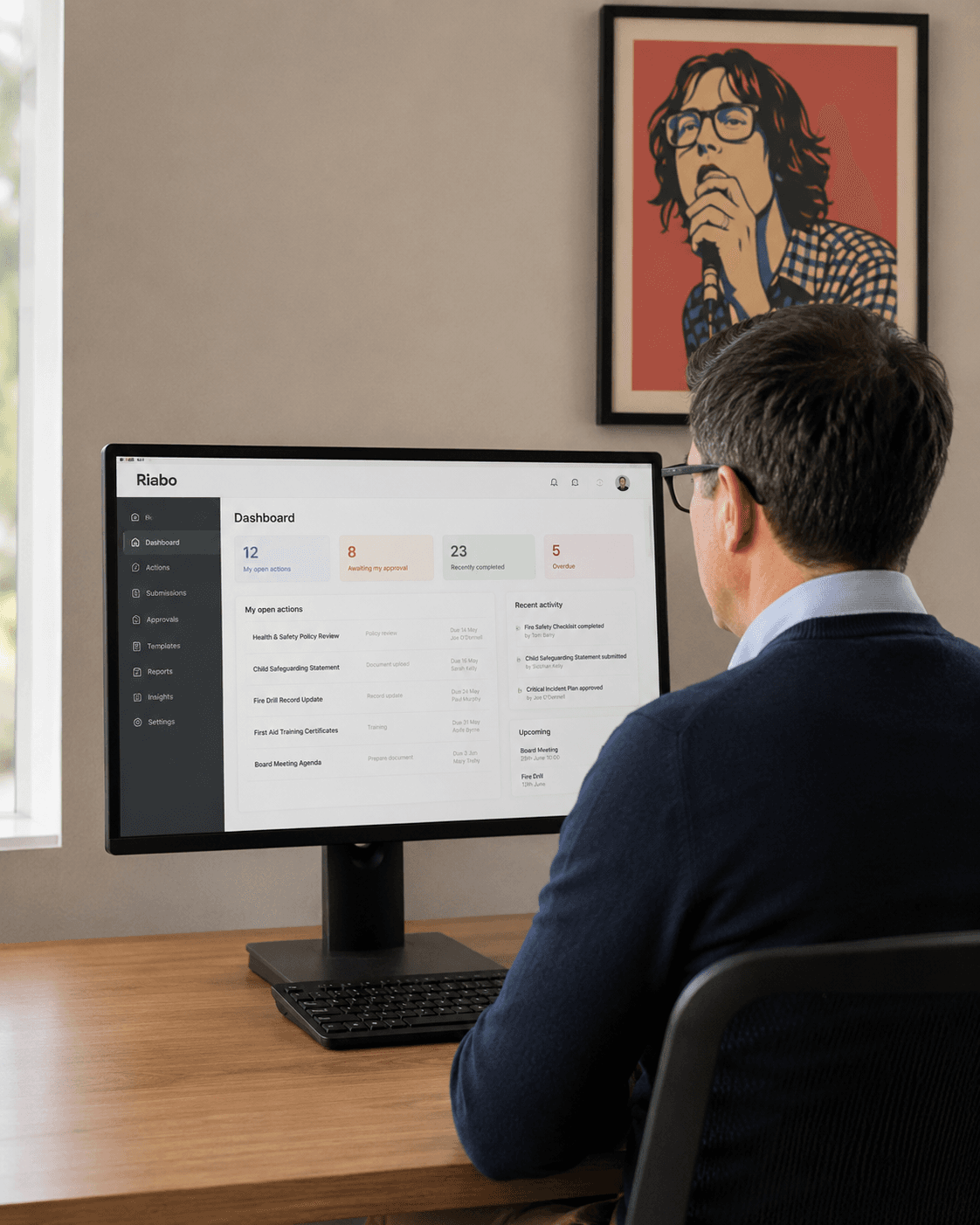
I wanted to set an action once, give it to the right people, and let the software look after the reminders and the record of what was complete. I wanted everyone to know what they had to do without me having to keep reminding them, and it would give them a spot of dopamine when they completed it.
Riabo was the system that would do all of this.
The philosophy
Supportive accountability, not surveillance.
I didn't want Riabo to be used to give staff a hard time. In fact, I wanted to make life easier for them. Rather than getting lots of emails from me with different jobs and reminders, I wanted to give them a single place to see all of their tasks.
I also wanted to make it easy for me to ensure all the jobs got done. I've never met anyone who enjoys being chased for paperwork. Gentle reminders with a smidgeon of fun when jobs got done, felt more like support than surveillance.
The Name
Why it's called Riabo
Riabo comes from Obair — the Irish word for work — but written backwards.
The name is a playful nod to helping the work move forwards, even if the letters go the other way. It's a little joke that only makes sense once someone points it out.
Looking ahead
Not just for schools.
I built Riabo for schools because that's the world I know. But the more I use it, the more I realise it could help almost any organisation where good people are trying to get important work done.
Try it in your own school
If you're struggling with managing tasks, give Riabo a try.
Start a free 30-day trial and see whether it gives your team a calmer way to keep important work moving. No credit card required.